
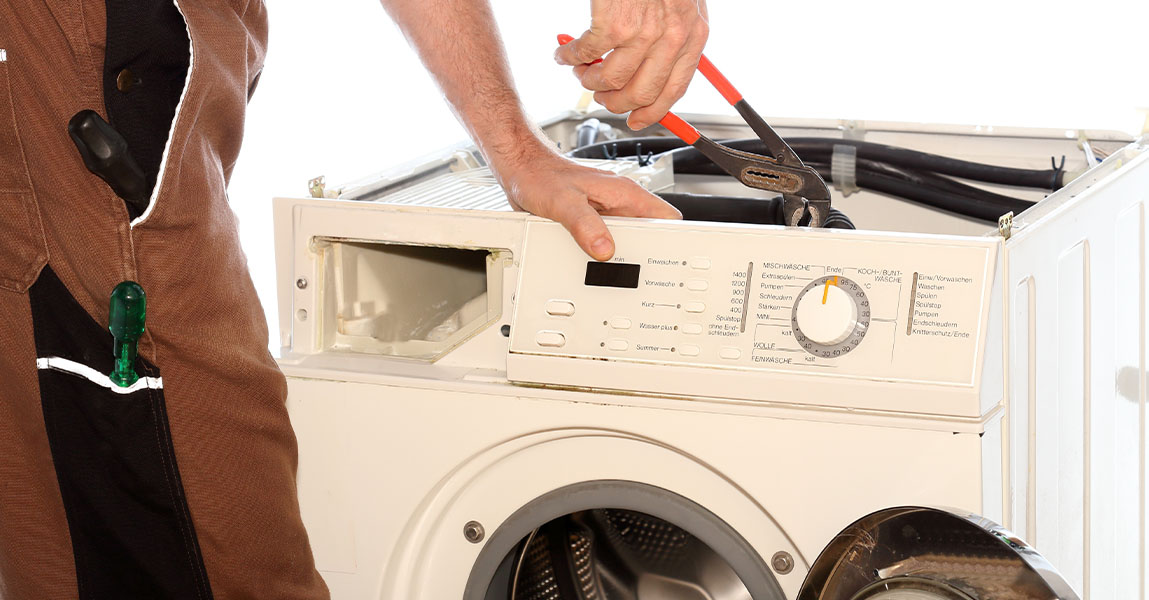
When your washer finishes a cycle but refuses to unlock, it can leave you stuck with wet clothes and no idea where to start. The door may click like it wants to open, or maybe it stays completely silent. Either way, you’re dealing with a safety system that didn’t reset as expected. These lockouts often point to a small part failing to send or receive the right signal. Understanding what those signals are—and what can interfere with them—is the key to solving the issue safely.
Power Issues Preventing the Unlock Signal
Sometimes the washer doesn’t unlock because the cycle never fully ended. If the control board doesn’t get enough power at the end of the cycle, the door stays locked. Power dips or interruptions mid-cycle confuse sensors, which then fail to send the “unlock” command. In other cases, a surge might trip an internal safety mode.
We suggest unplugging the washer for 5 to 10 minutes. This short reset often clears stalled programs and lets the door unlock. If that doesn’t work, try restarting a drain-spin cycle. That helps the washer finish properly and trigger the unlock. You can find more help with troubleshooting basics on our appliance repair in St Albert page.
Door Lock Motor Malfunction
If a reset didn’t work, the door lock motor might be worn out or stuck. This small component slides into place during the wash and releases at the end. Over time, its internal spring or solenoid can wear out or jam. When that happens, it either fails to hold the door shut or won’t release it once it should.
We usually check for physical signs first. A loose door, clicking without unlocking, or silence when pressing the unlock button could point to a jammed motor. In some models, manually moving the latch with a string or emergency release pull can help. But if the internal contacts are damaged, we often need to replace the lock assembly. When that’s the case, our team provides full washer repair in St Albert with part testing before doing any replacements.
Faulty Door Lock Sensor Feedback
Another common cause is a failed sensor reading. Washers rely on sensor data to confirm the door is shut and locked before they start. That same sensor confirms whether the door is safe to unlock. If the signal doesn’t match the final state, the washer won’t release the latch—even if everything else is done.
Dust, moisture, or age can affect these sensors. In many washers, they use a magnetic reed switch or position sensor behind the door frame. We check voltage readings across the switch while running a cycle to make sure it matches expected values. Cleaning the sensor area may help in some cases, but if the wiring is cracked or corroded, it needs to be replaced.
A failed sensor is harder to spot without the right tools, so it’s best handled by someone experienced in appliance repair in St Albert.
Water Not Draining Fully
Some washers won’t unlock the door if they still detect water inside. It’s a safety feature to keep water from flooding out onto the floor. If the drain pump fails or if the hose is blocked, the water level might not drop completely. In this case, the machine is locked for a reason.
Run a spin-drain cycle to clear any remaining water. If the drum doesn’t spin and you hear buzzing, the pump could be jammed. We’ve found that small items like socks or debris often block the filter or impeller blades. Clean the pump filter and inspect the drain hose for any clogs. If water remains, we manually drain it before unlocking the door.
Our team often finds this issue in households where regular filter cleaning isn’t part of the routine. Preventing it just takes checking the filter monthly. If you’re still stuck, contact JAY Appliances for expert help.
Control Board Not Sending the Final Signal
The control board acts like the washer’s brain. It processes input from every sensor and sends the final signal to unlock the door. If it fails to complete the cycle or doesn’t receive the right feedback, the signal never goes out. At that point, the door stays locked even though the wash is finished.
Control board failure is less common, but we still see it when there are wiring faults or moisture exposure. Burnt solder joints or failed relays inside the board are sometimes the cause. We inspect the wiring harness for damage first, and then test the output to the door lock using a multimeter.
When the board fails, the repair often involves replacing it as a whole unit. That decision depends on whether other parts also show wear. For boards in borderline shape, reseating connections may restore normal function.
Emergency Unlock Options and Warnings
Some washers include a manual release mechanism located near the pump filter behind a lower panel. If your washer doesn’t unlock and there’s no obvious error code, we recommend checking for this pull cord or release tab. It’s usually a small plastic handle that can be gently pulled to open the door.
Do not force the door open with tools. That risks damaging the lock assembly or bending the frame. If the release isn’t accessible or doesn’t work, turn off power and wait ten minutes. Sometimes after cooling down, the lock resets and disengages safely.
We’ve helped many homeowners who tried forcing the door and caused more damage. In those cases, the repair becomes more complicated and costly than it would have been. When in doubt, reach out for help before prying anything open.
Preventing the Problem in the Future
Avoiding door lock issues mostly comes down to two habits: regular cleaning and letting cycles finish naturally. Power interruptions, slamming the door, and skipping filter checks all increase wear on components. If you often stop the washer early or unplug it mid-cycle, it puts stress on the locking mechanism.
Make sure to clean the door gasket and frame once a month. That keeps debris and detergent buildup from interfering with the latch or sensor. Allow the washer to fully finish its cycle before unplugging or opening the door. If the washer shows frequent errors or delays in unlocking, it’s best to have it checked early before a part fails completely.
We’ve seen how a bit of maintenance extends the life of a washer and keeps these lockout issues from becoming serious.
FAQ
What’s the most common reason a washer door won’t unlock?
The most frequent cause is a faulty door lock mechanism that doesn’t release after a cycle ends. It may be stuck due to wear, electrical issues, or control board problems.
Can I open the washer door manually if it’s stuck?
Many washers include an emergency release tab behind the lower front panel. Pulling this gently can often unlock the door without causing damage.
Why won’t the washer door open even after unplugging the machine?
If the washer still has water inside or didn’t finish draining, it will stay locked as a safety measure. A failed drain pump or blocked hose may be the issue.
How do I know if the control board is the problem?
If the washer completes the cycle but fails to send the unlock signal, or if other functions also act up, the board may be damaged or faulty.
Should I try repairing a door lock myself?
Unless it’s a simple sensor cleaning or using the manual release, most door lock repairs are best handled by experienced technicians. Forcing the door or wiring the part wrong can cause more damage.